Pre-Launch Discovery Sprint for Dialysis Care Management
A care management app already in market. A new treatment population to serve. Before a single feature shipped, a human-centered discovery sprint mapped the full dialysis care journey, validated feature ideas with real patients and caregivers, and delivered 10 prioritized feature concepts. Two were added to the product pipeline.
The Arc
The Opportunity
An app already in market. A new treatment population to serve. Two weeks to get it right.
The Work
2-week research sprint. 9 participants. Journey map. Storyboard. Feature backlog.
The Shift
Research to roadmap. 10 feature concepts. 2 added to the pipeline.
The Opportunity
A care app already in market. A chance to let real users shape what came next.
CVS had an existing care management platform, the Health Tracker, already in the hands of enrolled patients. The team was extending it into a new experience layer built specifically for home hemodialysis: a complex, high-stakes treatment population with needs that hadn't yet been fully mapped.
Before a single new feature shipped, we saw an opening to do something intentional. Rather than build on assumptions, we proposed a human-centered discovery sprint. A structured two-week research engagement to take a holistic view of the current HemoCare experience, layer in real user feedback, and surface feature opportunities grounded in how patients and caregivers actually lived inside the treatment. The goal wasn't to find what was broken. It was to understand what was possible.
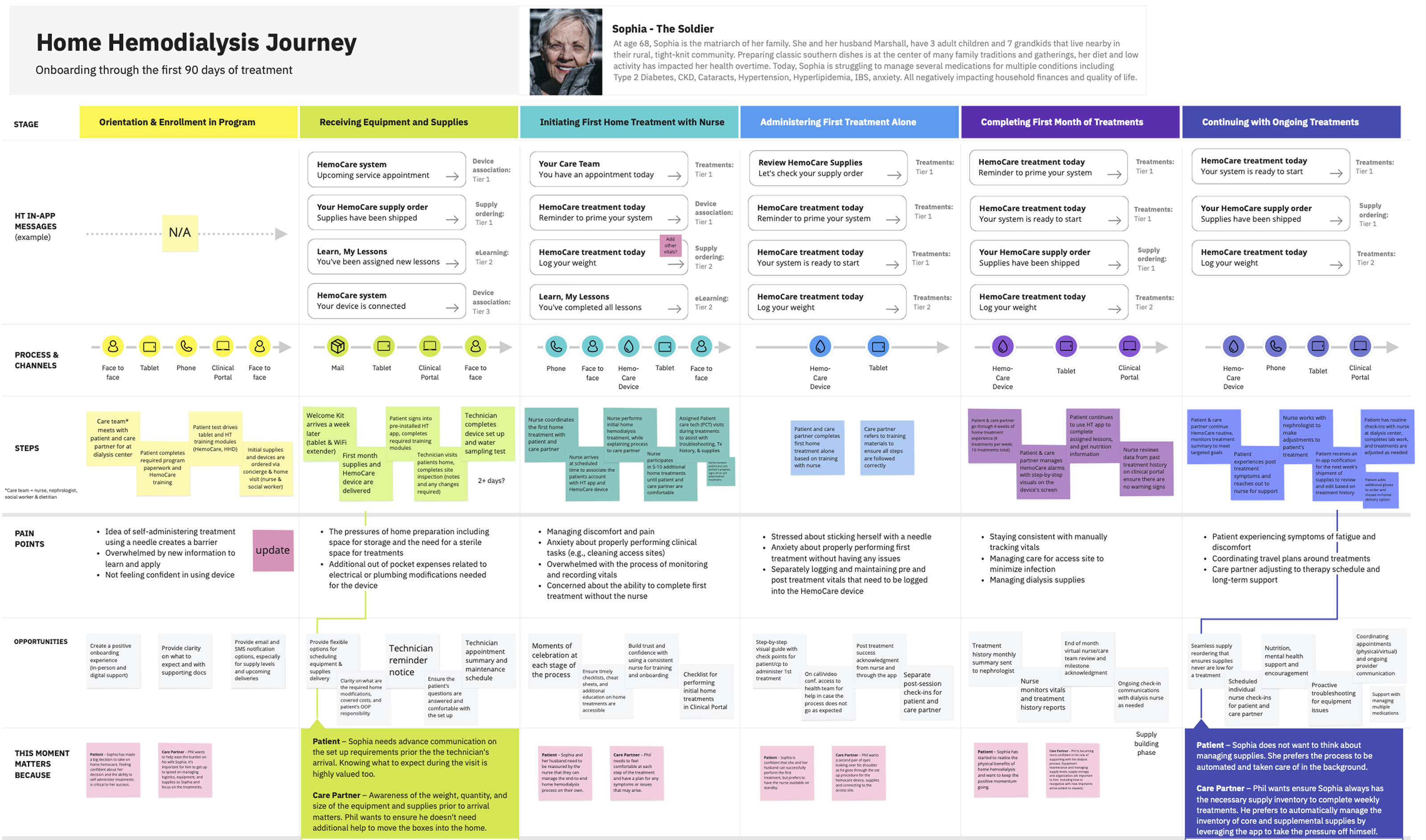
Patient journey. Home hemodialysis from enrollment through the first 90 days. Four phases, key touchpoints, pain points, and the emotional arc. The foundation for every feature concept that followed.
The People
A team of six. A sprint crew of three. One shared goal.
At CVS, I led the experience design train for chronic condition management: a team of six product designers responsible for the digital experience of kidney patients across the full course of their disease. This discovery sprint was the flagship initiative of that work. For the sprint itself, we ran lean. A crew of three: myself on design, the UX research lead, and a content strategist. The research lead owned consolidating findings. I owned the user journey layer, mapping the full HemoCare experience from onboarding through the first 90 days of treatment. Content strategy articulated the storyboard narrative.
On the sprint itself, I was the sole design voice, partnering with research to shape the methodology and responsible for translating what we learned into feature concepts the product team could act on. What we built together was a research-to-concept pipeline that ended in a product pitch.
"Design without research is guesswork. This sprint was built to make sure every concept we brought forward had a real human being behind it."
The Work
Two weeks. Five activities. Real patients and caregivers in the room.
A structured two-week community research engagement. Five activities. Nine participants. Five home hemodialysis patients and four caregivers. People actively living inside the treatment experience we were designing for.
The methodology was human-centered from the start. We mapped the current HemoCare app experience to the actual user journey, layered in research findings from the community platform, and used that synthesis to identify where the product could better support patients and caregivers from onboarding through the first 90 days of treatment. The sprint wasn't just insight-gathering. It was designed to move directly into feature validation.
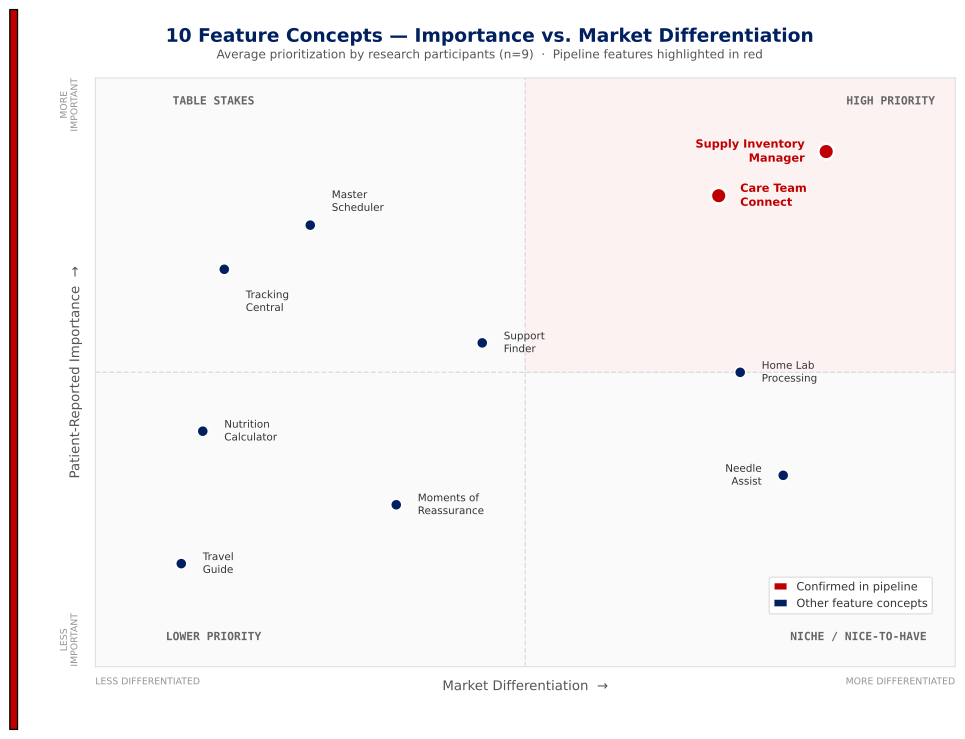
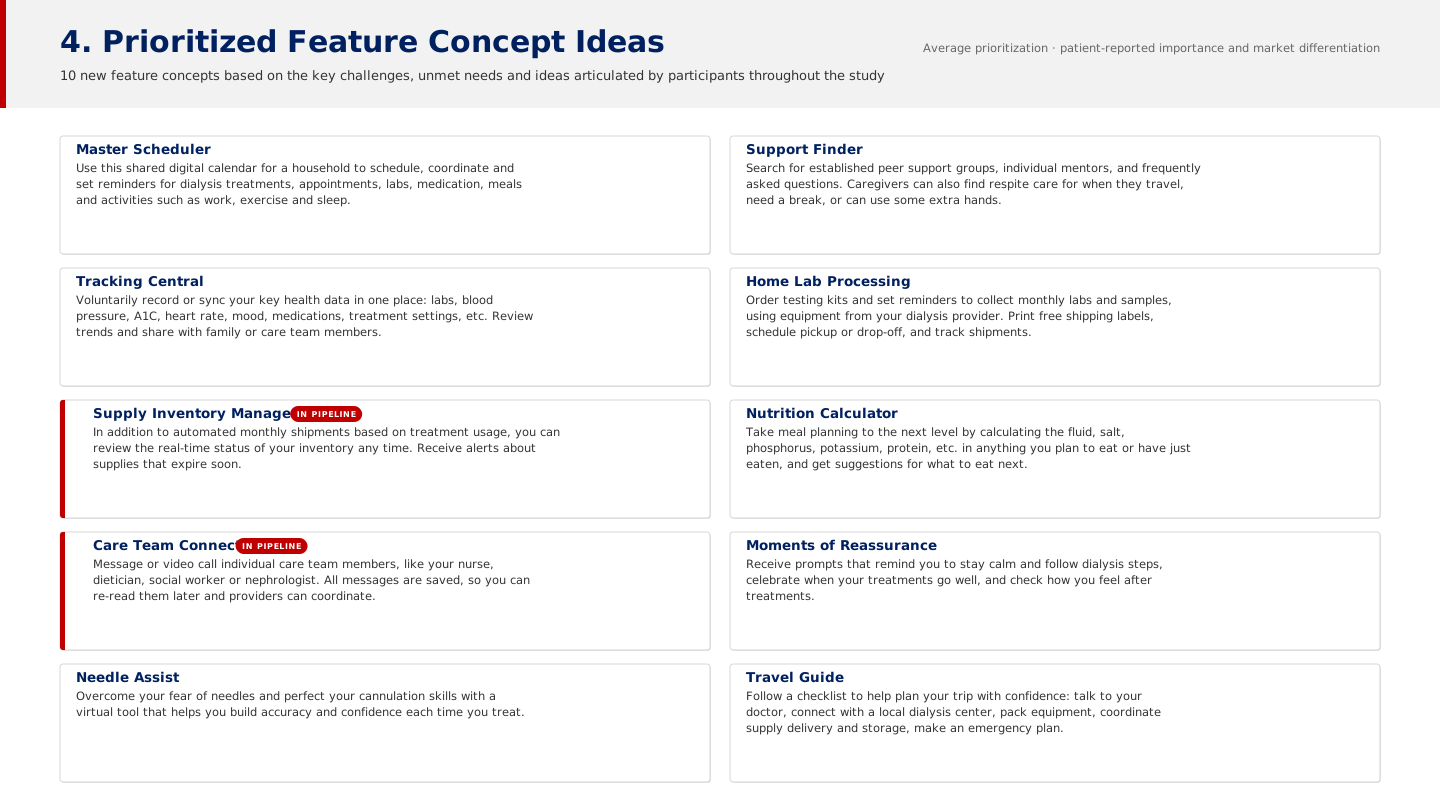
Three workstreams ran in parallel: a current-state journey map synthesizing the full home hemodialysis experience from enrollment through ongoing treatment. A caregiver segment analysis recognizing caregivers as a distinct stakeholder with their own support needs. Not a secondary consideration. And a prioritized feature concept backlog: 10 ideas plotted against patient-reported importance and market differentiation, ready to hand directly to the product team.
↗ Click to enlarge
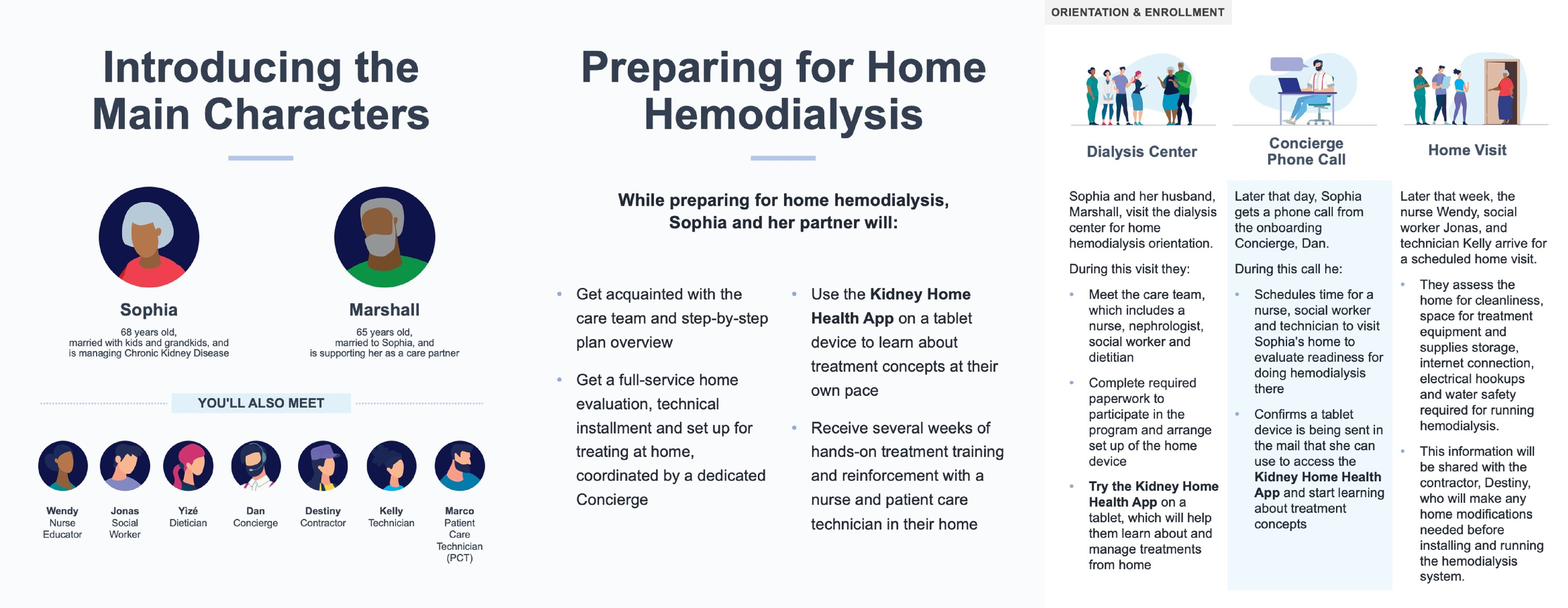
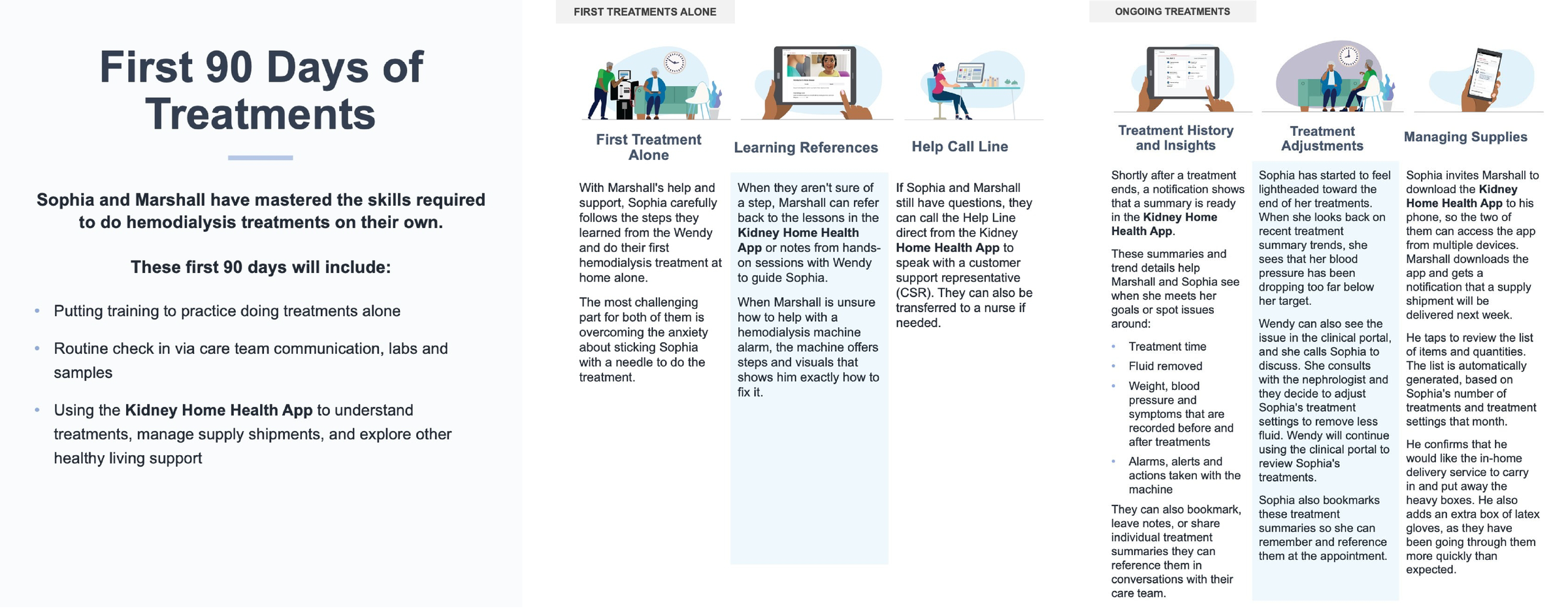
Storyboard narrative. Onboarding through the first 90 days of home hemodialysis. Built to give the product team a visceral picture of what the experience felt like before a single feature was prioritized.
The storyboard gave the product team the experience in narrative form. The feature work translated it into something they could act on.
↗ Click to enlarge
10 feature concepts mapped against patient-reported importance and market differentiation, with full concept descriptions. Supply Inventory Manager and Care Team Connect. Top-right quadrant, both added to the product pipeline.
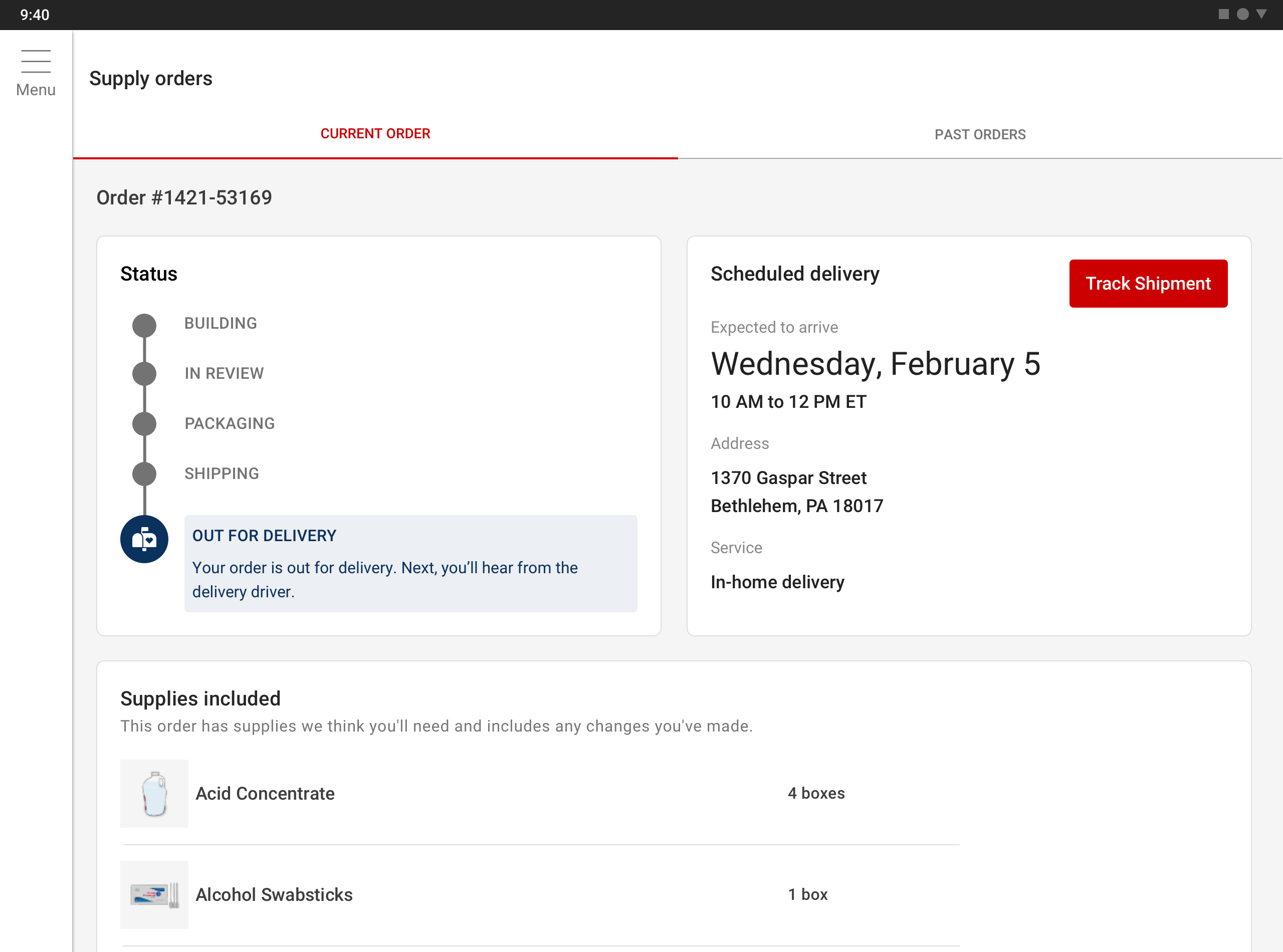
Supply Inventory Manager. Tablet view of the Supply Orders screen — order status, scheduled delivery, and the patient's supplies list. One of two feature concepts added to the product pipeline following the sprint.
The Shift
Two features entered the pipeline. A roadmap shaped by the people it was built for.
We generated 10 prioritized feature concepts. Two made it into the product pipeline. Supply Inventory Manager: real-time shipment tracking, expiration alerts, automated supply management. For a patient managing home dialysis, that's not a convenience feature. That's one less thing that can go wrong on treatment day.
Care Team Connect: direct messaging and video calls with individual care team members. Nurse, dietitian, social worker, nephrologist. All messages saved. All providers coordinating in one place. The roadmap shifted mid-stream, as roadmaps do. But the sprint didn't just generate features. It gave the product team a picture of who they were actually building for.
"Two features entered the pipeline. That's what it looks like when research has a direct line to the roadmap."
9
Research Participants
10
Feature Concepts
2
Entered Pipeline
5
Research Activities